 SANTOKU
 SANTOKU
Blog

What Is a Knife Tang? Full Tang vs Partial Tang...
A knife tang is the back portion of the blade that extends into the handle. Here is what full, partial, half, hidden and rat-tail tangs actually mean, how to tell...
What Is a Knife Tang? Full Tang vs Partial Tang...
A knife tang is the back portion of the blade that extends into the handle. Here is what full, partial, half, hidden and rat-tail tangs actually mean, how to tell...

The Correct Japanese Knife Sharpening Angle (Sa...
The correct sharpening angle for a Japanese knife is about 15° per side, or 30° in total on a double-bevel blade. Here is the angle chart, three ways to find...
The Correct Japanese Knife Sharpening Angle (Sa...
The correct sharpening angle for a Japanese knife is about 15° per side, or 30° in total on a double-bevel blade. Here is the angle chart, three ways to find...
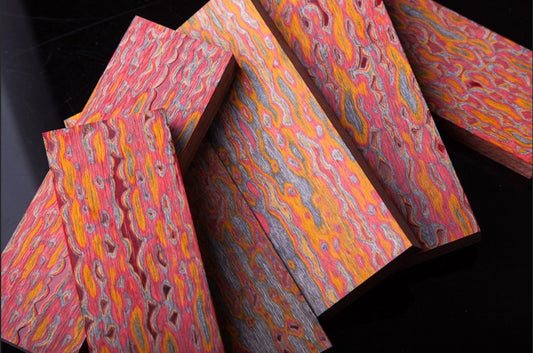
What Is Pakkawood? Why Japanese Knives Use It
Pakkawood is a wood-and-resin composite prized for durability and its resistance to heat and moisture — which is why it's such a common choice for Japanese knife handles. Here's what...
What Is Pakkawood? Why Japanese Knives Use It
Pakkawood is a wood-and-resin composite prized for durability and its resistance to heat and moisture — which is why it's such a common choice for Japanese knife handles. Here's what...
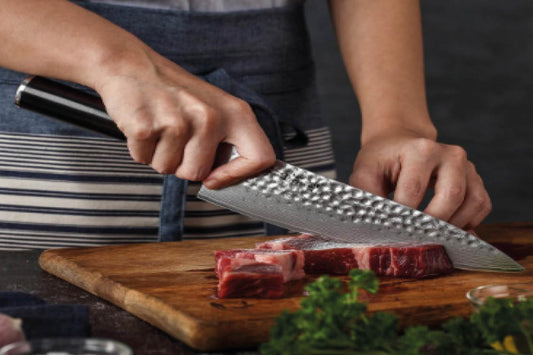
Why Do Chefs Knives Have Dimples (What Do They ...
Dimples might seem out of place on a chef’s knife and you’ll find that not every chef or cooking enthusiast chooses to use them and if they make cutting easier...
Why Do Chefs Knives Have Dimples (What Do They ...
Dimples might seem out of place on a chef’s knife and you’ll find that not every chef or cooking enthusiast chooses to use them and if they make cutting easier...
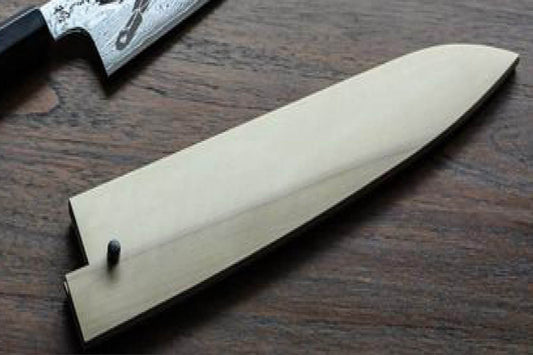
Is a Wooden Saya the Best Way to Protect a Knife?
When it comes to the safekeeping of your most prized cutlery, it goes without saying that we want to protect them from potential damage. A good quality knife warrants a...
Is a Wooden Saya the Best Way to Protect a Knife?
When it comes to the safekeeping of your most prized cutlery, it goes without saying that we want to protect them from potential damage. A good quality knife warrants a...
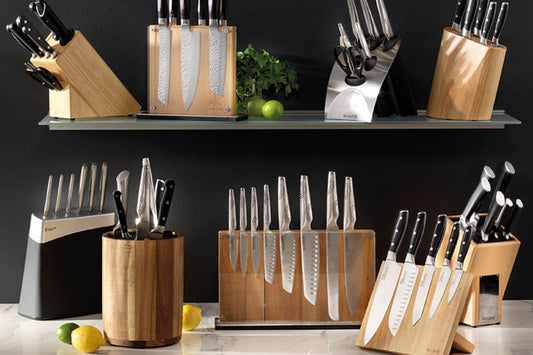
Can You Use a Knife Block to Hold Japanese Chef...
Knife blocks are a convenient method of storage for your Japanese chef knives. They are incredibly popular amongst home cooks and professional chefs alike - and for good reason. In...
Can You Use a Knife Block to Hold Japanese Chef...
Knife blocks are a convenient method of storage for your Japanese chef knives. They are incredibly popular amongst home cooks and professional chefs alike - and for good reason. In...

Japanese Knife Care | Complete Chef Knife Care ...
Everything you need to keep a Japanese-steel knife in good order: how to wash and dry it, remove rust without scratching the blade, hone and sharpen it, and store it...
Japanese Knife Care | Complete Chef Knife Care ...
Everything you need to keep a Japanese-steel knife in good order: how to wash and dry it, remove rust without scratching the blade, hone and sharpen it, and store it...
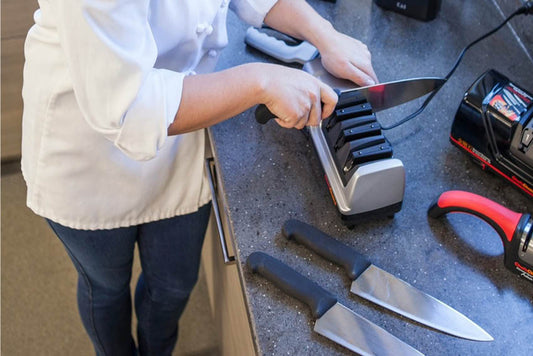
Can You Use an Electric Knife Sharpener on a Ja...
Can you use an electric knife sharpener on a Japanese chef knife? When it's safe, when it isn't, and why a whetstone gives a hard VG10 or AUS-10 blade a...
Can You Use an Electric Knife Sharpener on a Ja...
Can you use an electric knife sharpener on a Japanese chef knife? When it's safe, when it isn't, and why a whetstone gives a hard VG10 or AUS-10 blade a...
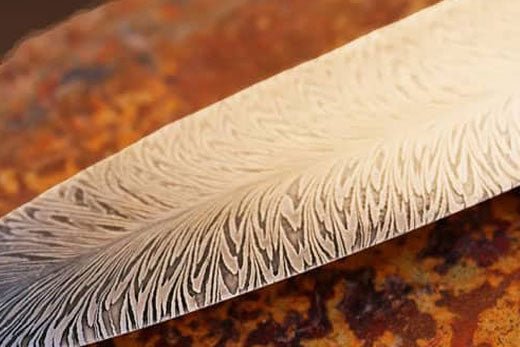
How Are Damascus Patterns Formed | Do They Serv...
Damascus steel and pattern-welding Damascus steel are two very different things that are often confused to be the same. With this in mind, we want to break down in this...
How Are Damascus Patterns Formed | Do They Serv...
Damascus steel and pattern-welding Damascus steel are two very different things that are often confused to be the same. With this in mind, we want to break down in this...
How to Remove Rust From Kitchen Knives
Rust removal from a Japanese chef knife can be a relatively quick and effortless task, depending on how much rust has formed on the blade. In this article, we are...
How to Remove Rust From Kitchen Knives
Rust removal from a Japanese chef knife can be a relatively quick and effortless task, depending on how much rust has formed on the blade. In this article, we are...

3 Suitable Methods For Japanese Knife Storage
How to store Japanese-steel knives safely: in a knife block, on a wooden magnetic rack, or in a slotted in-drawer organiser, plus the technique that keeps the cutting edge sharp.
3 Suitable Methods For Japanese Knife Storage
How to store Japanese-steel knives safely: in a knife block, on a wooden magnetic rack, or in a slotted in-drawer organiser, plus the technique that keeps the cutting edge sharp.
Can You Put Chef Knives in the Dishwasher? (Wil...
No — dishwashers dull, chip and corrode knife edges. Here's exactly what the heat, detergent and knocking do, and the 60-second hand-wash that prevents it.
Can You Put Chef Knives in the Dishwasher? (Wil...
No — dishwashers dull, chip and corrode knife edges. Here's exactly what the heat, detergent and knocking do, and the 60-second hand-wash that prevents it.